“How much does a feature wall cost?” is the first question most people ask, and it is a fair one. The honest answer is that it depends on the wall, and two walls that look the same size can be priced quite differently. This guide explains what affects the cost of a feature wall in Cape Town, so you know what to expect when you ask for a quote and how to get the most value for your budget.
1. The size of the wall
Feature walls are usually priced on area, so the bigger the wall, the more material and time it takes. Height matters too: a standard 2.4 m wall is quick to work on, while a double-volume entrance or a function hall wall may need scaffolding or extra ladders, which adds time.
When you send us photos, rough measurements help a lot. Width and height in metres is plenty to start with, and we will confirm on site if needed.
2. The finish you choose
Different finishes use different products and take different amounts of hand work.
- Pandomo is built up in several thin layers and worked to a smooth, seamless surface. It takes skill and time to get the soft, cloudy movement right.
- Stucco is hand-trowelled plaster, and the look you want (rustic or refined) changes how many coats and how much finishing it needs.
- Granite-look finishes recreate natural stone and are very hard-wearing.
- Special effects, such as glow-in-the-dark products, depend on the specific product and how it is applied.
You can see examples of each on our feature walls page.
3. The condition of the wall
This is the factor people most often overlook, and it can make the biggest difference. A decorative finish is only as good as the surface under it. If the wall has:
- cracks or hollow-sounding plaster,
- flaking or peeling paint,
- damp patches, mould or efflorescence (white salty marks),
- old wallpaper or gloss paint,
then it needs repair and preparation before any finish goes on. Skipping this step is how feature walls fail, so we never do it. In Cape Town’s wetter suburbs and older homes, damp in particular is common, and we will always tell you if we find it and explain what needs to be fixed.
4. Access and site conditions
Where the wall is and how easy it is to reach also affect the time involved. A ground-floor lounge with parking at the door is straightforward. A fourth-floor apartment with no lift, a wall behind built-in furniture, or a busy restaurant where we can only work after hours all take more planning. Let us know about anything like this up front and we will include it in the quote so there are no surprises.
5. Edges, corners and details
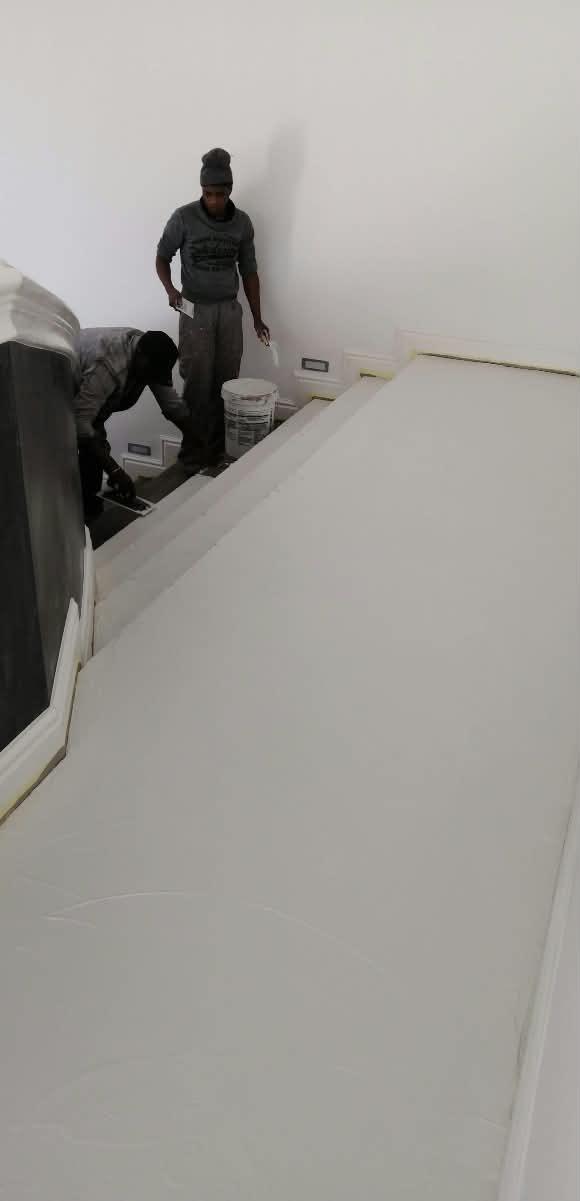
A flat rectangle is the simplest wall to finish. Pillars, arches, niches, window reveals, light switches and plug points all add detailed hand work, because every edge has to be neat. A wall that wraps around a corner or continues up a staircase also takes longer than a single flat face.
6. Combining jobs
If you are planning more than one thing, such as a feature wall plus a new screed or epoxy floor, or a feature wall inside and boundary wall painting outside, doing them together usually makes better use of time on site than separate visits. Mention everything you are thinking about when you ask for a quote.
How to get the most from your budget
Choose one wall, and choose it well. A feature wall works because it stands out. One well-chosen wall, usually the first one you see when you walk into a room, has far more impact than several smaller ones.
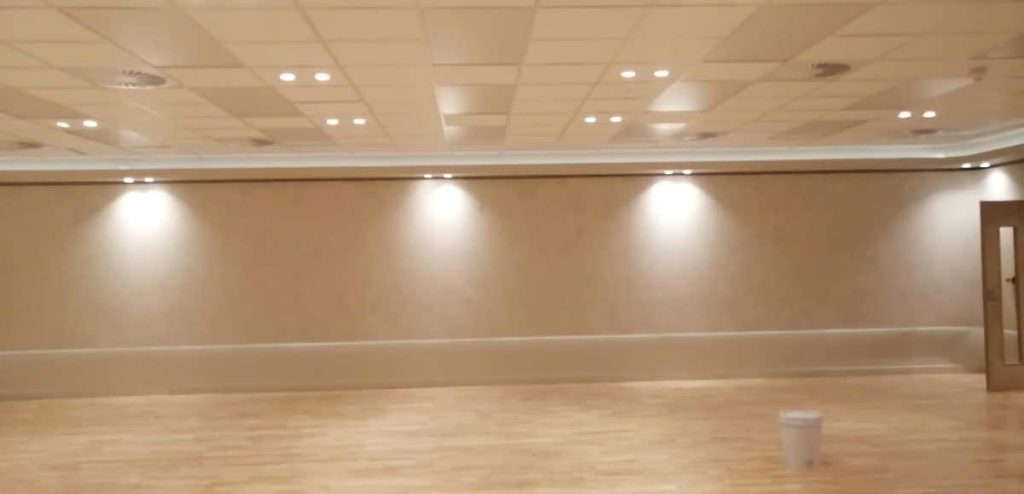
Think about lighting. The same finish can look ordinary or spectacular depending on the light. If you are renovating, consider a downlight or wall washer to show off the finish. It does not cost much and makes a big difference.
Fix problems once. If the wall has damp or cracks, it is cheaper to fix them properly now than to redo a finish later.
Pick a finish for the space, not just the look. A smooth Pandomo is beautiful in a lounge, but behind a busy bar a granite-look finish may serve you better because it hides knocks and wipes clean.
Why cheap feature walls cost more in the end
It is tempting to go with the lowest price, but with decorative finishes the difference is usually in what you cannot see: the preparation, the number of coats and the quality of the product. A rushed finish over an unprepared wall can crack, flake or show patchy colour within a year, and then it has to be stripped and redone. That is why we prepare every wall properly and back our work with a 5-year guarantee.
What a good quote should include
When you compare quotes, check that each one covers:
- the finish and product being used,
- the area being covered,
- any repairs or preparation needed,
- protection of floors and furniture and cleaning up afterwards,
- the guarantee on the work.
If a quote is much lower than others, ask what has been left out.
Get a free quote
Our quotes are free. The quickest way to get one is to WhatsApp Shelton a photo of the wall, rough measurements, your suburb and a picture of the finish you like. We will come back to you with advice and a price, and arrange a visit if the job needs it. Prefer email or a form? Use our contact page.